Household Goods Removals to Germany from the UK: Full Cost Guide (2026)

Moving household goods from the UK to Germany is one of the most active relocation corridors in Europe. Every year, thousands of professionals, families, and expats relocate to major German cities such as Berlin, Munich, Frankfurt, Hamburg, Stuttgart, and Düsseldorf.
Whether you are relocating for work, family reasons, or long-term lifestyle change, understanding how household goods removals to Germany work is critical to avoiding delays, unexpected costs, and logistical issues.
This complete guide covers everything you need to know, including cost breakdowns, transit times, transport options, customs requirements, packing standards, storage solutions, and real operational challenges when moving from the UK to Germany.
Reloux® specialises in road-based European removals only, providing fast, predictable, and fully managed door-to-door relocation services without the complications of sea freight.

Why Germany Is One of the Top Relocation Destinations in Europe
Germany continues to attract UK-based expats due to its economic strength and stability. Unlike many other European relocation destinations, Germany offers a structured environment with long-term career opportunities and strong public systems.
Key reasons people move include:
High demand for skilled workers in engineering, IT, logistics, finance, and manufacturing
Competitive salaries in cities like Frankfurt and Munich
Central European location with easy travel to France, Austria, Switzerland, and Netherlands
Excellent infrastructure, healthcare, and education systems
Long-term rental stability and strong tenant protections
Many relocations are employer-driven, meaning timelines are fixed and require efficient logistics planning.
How Household Goods Removals to Germany Work (Step-by-Step)
Removals to Germany from the UK are completed entirely via road transport. This is the fastest and most reliable method for moving household goods within Europe.
A professional relocation service typically follows this process:
1. Pre-Move Survey
A survey is conducted via video or in-home visit to assess volume, access conditions, and packing requirements.
2. Volume Calculation
All household goods are measured in cubic metres (CBM), which determines vehicle size and cost.
3. Export Packing
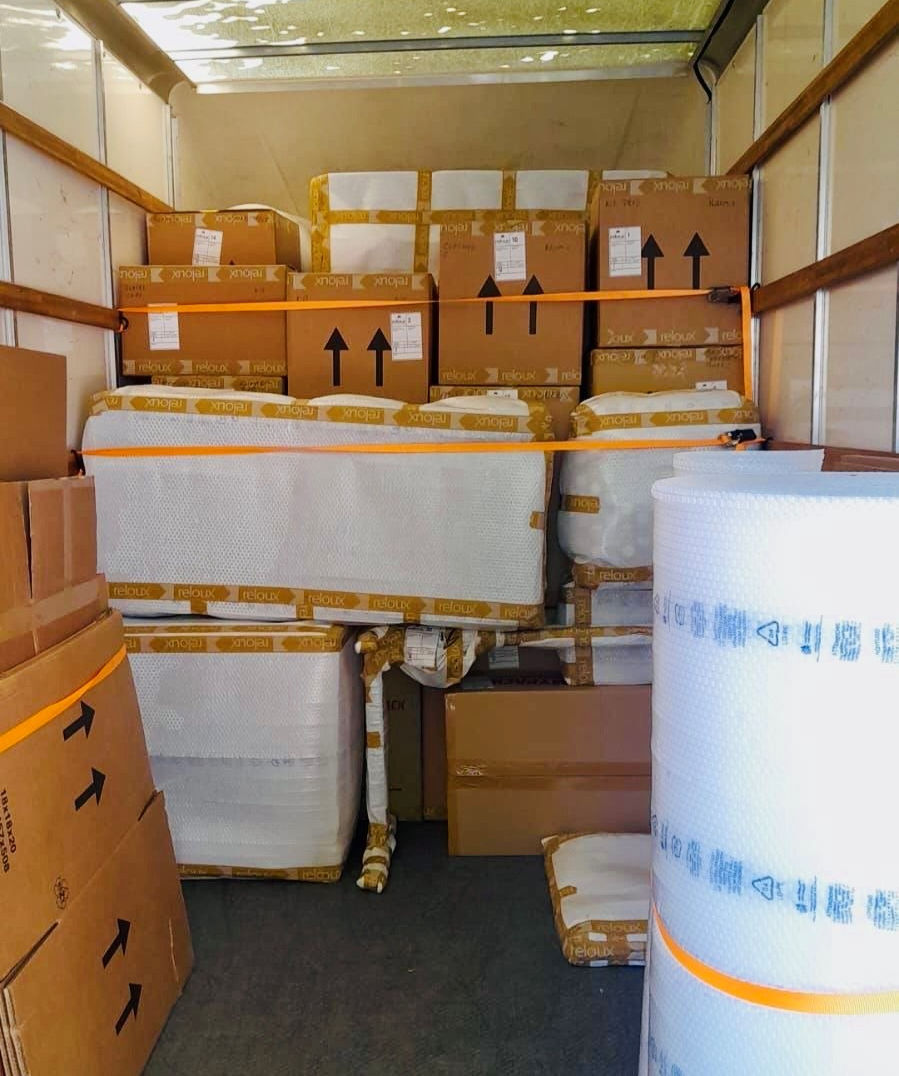
Professional packing teams prepare all items using export-grade materials to ensure protection during transit.
4. Loading
Goods are loaded into either a shared vehicle (part load) or dedicated truck.
5. Transport by Road
The shipment travels directly from the UK to Germany via European road networks.
6. Customs Clearance
Post-Brexit, shipments must pass customs before entering Germany.
7. Final Delivery
Goods are delivered inside your new property, with optional unpacking services.
This structured approach ensures compliance, safety, and efficiency.

Cost of Household Goods Removals to Germany (2026 Detailed Breakdown)
The cost of moving to Germany is influenced by multiple operational factors, not just distance.
Key Pricing Factors
Transport method (part load or dedicated truck)
Collection and delivery locations
Access challenges (stairs, lifts, parking restrictions)
Packing complexity
Storage requirements
Realistic Cost Breakdown
Move Type | Volume | Estimated Cost |
Small Move | 5–10 CBM | £1,000 – £2,000 |
Medium Move | 10–25 CBM | £1,800 – £3,500 |
Large Move | 25–50 CBM | £3,000 – £6,000 |
Full House | 50–65 CBM | £8,000 – £14,000+ |
Dedicated trucks increase cost but significantly reduce transit time.
Part Load vs Dedicated Truck — Full Comparison
Part Load (Shared Transport)
This is the most commonly used service for removals to Germany.
Advantages:
Lower cost
Ideal for smaller moves
Efficient route planning
Disadvantages:
Flexible delivery windows required
Slightly longer transit time
Transit time:
7–14 days
Dedicated Truck (Exclusive Use)
A full vehicle is assigned to your shipment.
Advantages:
Faster delivery
Fixed dates
Direct transport
Disadvantages:
Higher cost
Transit time:
3–6 days
Transit Times Explained in Detail
Transit times vary based on route, logistics, and delivery conditions.
Typical delivery estimates:
London to Frankfurt: 3–5 days (dedicated) / 7–10 days (part load)
London to Munich: 4–6 days / 8–14 days
London to Berlin: 5–7 days / 10–14 days
Delays can occur due to customs, traffic, or access restrictions.
Customs Requirements for Germany
Since Brexit, all household goods removals from the UK to Germany require full customs clearance. This is one of the most important parts of your relocation, and incorrect documentation is the number one cause of delays, inspections, and unexpected charges.
Duty-Free Eligibility for Household Goods
Most household goods can be imported into Germany duty-free, but only if strict conditions are met.
You may qualify for duty-free entry if:
You have lived outside the EU for at least 12 months
You are relocating your primary residence to Germany
Your household goods have been owned and used for at least 6 months prior to shipping
The goods are imported within 12 months of establishing residence in Germany
The items are intended for personal use and not resale
You agree to keep the goods for at least 12 months after import
These conditions are enforced by German customs and must be proven with documentation.

Required Documents for Germany Customs Clearance
To complete customs clearance, the following documents are typically required:
Copy of passport
Proof of residence in Germany (Anmeldung or rental agreement)
Inventory list of all shipped goods
Proof of residence outside the EU (minimum 12 months)
Employment contract or relocation letter (if applicable)
German customs declaration form (Form 0350)
The Form 0350 is a key document used to declare household goods under the “transfer of residence” customs procedure.
It confirms:
Your previous residence outside the EU
Your intention to live in Germany
That your goods are personal and used
That they will continue to be used after import
What Qualifies as “Household Goods”
German customs clearly defines what counts as removal goods.
This includes:
Furniture and household items
Personal belongings and clothing
Household appliances
Personal vehicles (with conditions)
Household pets
Personal equipment used for work
These goods must be for personal use only and not part of any commercial activity.
Items That Do NOT Qualify for Duty-Free Import
Certain items are excluded from duty-free household goods status and may be taxed or restricted.
These include:
Alcohol and tobacco products
Commercial vehicles or business equipment
Stock goods or materials
High-value items without declared value
Important: Any item with a value above €5,000 must be declared individually in the inventory.
Restricted and Prohibited Items
Germany has strict import regulations. The following items are either restricted or prohibited:
Weapons and ammunition
Certain medications and narcotics
Fireworks and hazardous materials
Counterfeit goods
Cultural artefacts and protected items
Food, plants, and organic materials are also commonly restricted or subject to inspection.
Failure to declare restricted items can result in fines, confiscation, or shipment delays.

Customs Process Step-by-Step
Here’s how customs clearance typically works for household removals to Germany:
Submission of documents and inventory
Review by German customs authorities
Possible inspection of shipment
Approval for duty-free entry (if eligible)
Release of goods for delivery
Most shipments are cleared without physical inspection if documentation is complete and professionally prepared.
Important Rules After Import
Even after your goods are delivered, customs conditions still apply:
Goods must remain in your possession for at least 12 months
Items cannot be sold, rented, or transferred during this period
Moving address within Germany must be reported
Failure to comply may result in retroactive duties and taxes.
Why Professional Packing and Documentation Matter
One of the biggest risks in international removals is improper documentation.
Professional removals companies ensure:
Correct inventory preparation
Proper packing aligned with customs standards
Reduced inspection risk
Faster clearance
Owner-packed shipments are far more likely to be inspected and delayed.
Key Takeaway
Customs clearance for Germany is not complicated — but it is strict.
If you meet the eligibility criteria and provide correct documentation, your household goods can enter Germany duty-free and without delays.
However, missing paperwork, incorrect declarations, or restricted items can quickly turn a smooth move into a costly problem.
Storage in Transit (SIT) — When You Need It
Storage is required when delivery cannot be completed immediately.
Common scenarios:
Property not ready
Temporary accommodation
Delayed keys
Typical cost:
£18–£28 per week per container
Storage allows flexibility without disrupting the move.
Export Packing Standards for Germany Removals
Packing quality directly impacts the safety of your goods.
Professional packing includes:
Double-walled cartons
Bubble wrap and paper protection
Furniture blankets
Custom crating for fragile items
Owner-packed shipments increase risk and may affect liability.
Access and Delivery Challenges in Germany
Delivery conditions can significantly impact cost and logistics.
Common issues:
Narrow streets in Berlin
Parking restrictions in Munich
Apartment buildings without lifts
Long carry distances
Solutions include:
Shuttle vehicles
Parking permits
External lifts
Pet Transport to Germany
Pet relocation must comply with EU regulations.
Requirements include:
Microchip
Rabies vaccination
Animal Health Certificate
Planning pet transport alongside your move ensures coordination and avoids delays.
Living in Germany — Practical Reality for Expats
Germany offers a high standard of living but requires adjustment.
Important considerations:
Anmeldung (registration) required
Strict recycling laws
Rentals often unfurnished
Formal processes for most services
City differences:
Berlin: international and flexible
Munich: structured and premium
Regional Coverage Across Germany
Reloux supports removals across all major regions:
Berlin
Munich
Frankfurt
Hamburg
Stuttgart
Düsseldorf
Cologne
Leipzig
Nuremberg
Bremen
Smaller towns and rural areas are also covered with planning.

Corporate Relocation, Moving for Work
Most UK to Germany moves are employment-based.
These require:
Fixed timelines
Flexible delivery
Storage solutions
Coordination with employers
Efficient planning ensures no disruption to work schedules.
Common Mistakes When Moving to Germany
Underestimating volume
Choosing cheapest quote only
Poor documentation
Owner-packing
Ignoring access challenges
A professional survey avoids these issues.
How to Calculate Volume (CBM Guide)
Examples:
Box: 0.1–0.15 CBM
Sofa: ~2 CBM
1-bed flat: 10–20 CBM
3-bed house: 35–60 CBM
Accurate volume = accurate pricing.
Who This Move Is For
Suitable for:
Expats
Professionals
Families
Full household moves
Not suitable for:
Small parcels
Commercial cargo
When Should You Book Your Move to Germany?
For most household goods removals to Germany, you should book:
2–4 weeks in advance for part-load moves
3–6 weeks in advance for dedicated trucks
However, during summer (May–September) — the busiest relocation period — you should book:
4–8 weeks in advance
Why Booking Early Matters
Better availability for your preferred dates
Lower costs with efficient route planning
Enough time to prepare customs documents
Reduced risk of delays or last-minute charges
Why Choose Reloux for Removals to Germany
Reloux focuses on efficiency, transparency, and reliability.
Key advantages:
Road-only transport
Part load and dedicated options
Full door-to-door service
Professional packing
Storage solutions
Experience in UK–Germany relocations
UK to Germany Removals Route & Logistics Explained
Moving household goods from the UK to Germany is not just about distance — it is about routing, border handling, and efficient scheduling.
Most removals follow structured European road corridors:
UK → Dover → Calais → Belgium → Germany
UK → Eurotunnel → France → Germany
UK → Netherlands → Western Germany
For cities like Cologne and Düsseldorf, routes are shorter and more direct, resulting in faster transit times.
For southern destinations such as Munich and Stuttgart, transport takes longer due to distance and driving regulations.
This is why road removals are the most efficient option — they allow flexible routing, fewer handling points, and predictable delivery windows.
Delivery & Access Planning in Germany (CRITICAL)
One of the biggest factors affecting your move cost is delivery access — something most low-cost quotes ignore.
In major German cities such as Berlin and Hamburg, you may encounter:
Narrow streets with limited truck access
Strict parking restrictions
Apartment buildings without lifts
Long carry distances from parking to property
Possible solutions include:
Shuttle service (smaller vehicle transfer)
Temporary parking permits
External furniture lifts
Additional handling crew
This is exactly where many “cheap quotes” become expensive later.
Surrounding Countries & Cross-Border Relocation to Germany
Germany is centrally located, meaning many relocations don’t just come from the UK.
Reloux also supports moves to Germany from surrounding countries such as:
France
Netherlands
Belgium
This is important because groupage (part-load) routes are often built across multiple countries, helping reduce cost and improve efficiency.

Full Relocation Timeline (What Actually Happens)
Understanding timeline is critical for planning your move.
Typical relocation timeline:
2–6 weeks before move
Request quote
Complete survey
Confirm booking
1–2 weeks before move
Finalise packing list
Prepare documents
Confirm access details
Moving day
Professional packing and loading
Transit phase
3–6 days (dedicated)
7–14 days (part-load)
Delivery in Germany
Unloading and placement
Optional unpacking
Insurance & Liability (MoveProtect Cover)
When shipping household goods internationally, protection is essential.
Standard liability is limited, which is why enhanced cover is recommended.
MoveProtect-type cover typically includes:
Protection against damage
Loss during transit
Handling incidents
Important notes:
Owner-packed boxes often have limited coverage
High-value items may require declaration
Claims require inventory reference and photos
What You Cannot Ship to Germany
Many people don’t realise there are restrictions on household goods shipping.
Common restricted or problematic items:
Food products
Plants and soil-based items
Hazardous goods (paint, chemicals)
Perfumes (flammable liquids)
Lithium batteries (restricted transport)
Sending prohibited items can delay your entire shipment.
Best Cities in Germany for UK Expats
Germany offers different lifestyles depending on location.
Berlin
International and creative
Lower cost compared to other major cities
Munich
High quality of life
Expensive but structured
Frankfurt
Financial hub
Strong expat community
Hamburg
Maritime city
Balanced lifestyle
Mistakes That Increase Your Moving Cost
If you want real value, this section matters most.
Top cost mistakes:
Underestimating volume (biggest issue)
Booking too late (limited availability)
Ignoring access conditions
Choosing cheapest quote only
Not using professional packing
Who Should Use Part-Load vs Dedicated (Clear Decision Guide)
Choose part-load if:
You are flexible on delivery dates
You have under ~25 CBM
You want lower cost
Choose dedicated truck if:
You need fixed dates
You have large volume
You want fastest delivery
Planning a Successful Move
Moving household goods to Germany requires proper planning and the right logistics partner.
Road transport offers:
Faster delivery
Lower risk
Better cost control
The most important step is a detailed survey and accurate quote.
FAQs – Household Goods Removals to Germany from the UK
How much does it cost to move household goods to Germany from the UK?
The cost of household goods removals to Germany typically ranges from £1,000 to £14,000+ depending on the volume, service type, and access conditions. Small part-load moves (5–10 CBM) usually cost between £1,000 and £2,000, while full house moves using a dedicated truck (50+ CBM) can range from £8,000 to £14,000 or more. The most accurate way to calculate cost is through a professional volume survey.
What is the cheapest way to move to Germany from the UK?
The most cost-effective option is a part-load (shared truck) service, where your goods share transport with other shipments heading to Germany. This significantly reduces cost compared to a dedicated truck. However, delivery times are slightly longer, typically between 7 and 14 days.
How long does it take to move household goods to Germany?
Transit time depends on the service selected. A dedicated truck usually delivers within 3–6 days, while part-load services take around 7–14 days. Delivery timelines can vary depending on location, customs clearance, and route scheduling.
Do I need to pay customs duties when moving to Germany?
Most household goods shipments qualify for duty-free import if you are relocating your main residence and the items have been owned and used prior to the move. However, customs clearance is still required, and proper documentation must be provided to avoid delays.
What documents are required for removals to Germany?
Typical documents required include a passport copy, proof of residence in Germany (such as a rental agreement), a detailed inventory list, and customs declaration forms. Your removal company will usually guide you through the process.
Is road transport the best option for removals to Germany?
Yes, road transport is the most efficient method for moving household goods from the UK to Germany. It offers faster transit times, fewer handling points, and more flexible delivery compared to sea freight. This is why most professional removals to Germany are completed by road.
Should I choose part-load or a dedicated truck?
Part-load is ideal for smaller moves and flexible delivery schedules, while a dedicated truck is best for larger households or time-sensitive relocations. Dedicated services are faster but more expensive, whereas part-load offers better value for money.
Can I pack my own boxes for a move to Germany?
Owner-packed boxes are not recommended for international removals. They increase the risk of customs inspections and may limit liability coverage. Professional export packing ensures your goods are protected and compliant with international transport standards.
Can I move with pets to Germany?
Yes, pets can be transported to Germany, but they must meet EU requirements. This includes having a microchip, a valid rabies vaccination, and an Animal Health Certificate. Planning pet transport alongside your household move is recommended.
What items are not allowed when moving to Germany?
Certain items are restricted or prohibited, including food, plants, hazardous materials (such as paint or chemicals), perfumes (flammable), and some lithium battery items. Including restricted goods can delay your entire shipment.
Do you offer storage if my property in Germany is not ready?
Yes, storage in transit (SIT) is available if your new home is not ready. Goods can be securely stored in containerised storage facilities, typically costing around £20–£30 per week depending on volume.
How do I calculate the volume of my household goods?
Volume is measured in cubic metres (CBM). As a guide, a standard moving box is around 0.1–0.15 CBM, while a 3-bedroom house may be between 35 and 60 CBM. A professional survey provides the most accurate estimate.
Do removal companies deliver inside the property in Germany?
Yes, most professional removals services include delivery inside your property. However, additional charges may apply for difficult access such as stairs, long carries, or buildings without lifts.
When should I book my move to Germany?
It is recommended to book your removal 2–6 weeks in advance, especially during busy periods. Early booking ensures better availability and more efficient route planning.
Is it better to move everything or buy new in Germany?
This depends on the value and volume of your goods. For larger households, moving your furniture is usually more cost-effective. For smaller moves, it may be worth comparing removal costs with replacement costs in Germany.
Get Your Personalised Germany Removal Quote
Planning a move to Germany? Get a tailored door-to-door removal plan based on your exact volume, location, and timeline.
With Reloux, you receive:
Accurate volume assessment (no guesswork)
Transparent, all-inclusive pricing
The most efficient transport option (part-load or dedicated)
Full support with customs and delivery
Request your quote today and plan your move with confidence