
Removals to Israel from the UK: How to Prepare for Delivery to Your New Home

There is a moment when an overseas move to Israel starts to feel real: you picture your own dining table in the new kitchen, your books on the shelves and the children sleeping in familiar beds.
Then the practical questions arrive. Will the sofa fit in the lift? Where can the delivery vehicle stop? What happens if you have booked your flights but the keys are not ready?
To prepare for delivery when arranging removals to Israel from the UK, confirm your full address, check the complete access route, measure large furniture, arrange any building permissions and agree the delivery services in writing. Keep your move coordinator informed about your property handover and customs paperwork, and treat estimated shipping dates separately from confirmed home delivery arrangements.
A little preparation at the destination can make the difference between a straightforward unloading day and last-minute decisions on the pavement.

Who is this Removals to Israel from the UK guide for?
This guide is for individuals, couples and families shipping household goods from the UK to Israel, including people making Aliyah, returning residents and those moving for work or family reasons.
It is particularly useful if you are moving into an apartment, renting before buying, completing renovations or arranging the move while still in Britain. The focus is the final stage: getting your belongings from the delivery vehicle into the right rooms.
1. Start planning delivery before your belongings leave the UK
It is easy to concentrate on packing and collection because those are the parts happening in front of you. However, destination access can affect the equipment, labour and vehicle arrangements needed later.
Share what you know about your Israeli property during the moving survey. If you have not chosen a home, say so. An initial quotation based on assumed access may need reviewing once the actual delivery address is available.
Prepare a simple delivery information pack containing:
Your full address, postcode, building entrance and apartment number.
The floor level, including any steps before reaching the lift.
Your local telephone number and an alternative contact.
Photographs of the street, entrance, lift, stairs and apartment doorway.
Details of large or unusually heavy furniture.
The earliest date you will have keys and be ready to receive everything.
Any building restrictions on deliveries, lift use or working hours.
Where helpful, provide the address in both English and Hebrew and a map pin for the correct entrance. A pin supports the written address; it should not replace it.

2. Check the whole route from the street to the room
“There is a lift” is a helpful starting point, but it does not tell the delivery team whether your furniture can use it.
The lift may have a narrow door. There may be steps between the pavement and reception. A long cabinet might fit inside the lift but be unable to turn into the corridor outside your apartment.
Walk the complete route that your belongings will follow, ideally filming a short, steady video as you go. Ask your landlord, estate agent or someone you trust to do this if you are still in the UK.
Part of the route | What to check | What to send your move coordinator |
Street and unloading position | Legal stopping space, vehicle restrictions and distance to the entrance | Street photos, map location and known restrictions |
Building entrance | Gates, steps, narrow doors and overhead obstructions | Photos and clear opening measurements |
Lift | Door opening, internal dimensions, rated capacity and permitted use | Measurements and a photo of the capacity plate |
Stairs and landings | Width, tight turns, handrails and low ceilings | Photos or a continuous walk-through video |
Apartment entrance | Door opening and turning space immediately inside | Measurements and photos from both sides |
Final room | Internal doors, corridor turns and usable floor space | A simple room plan and relevant measurements |
Use actual measurements rather than estimates. Even accurate measurements are only part of an access assessment: weight, shape, packing and safe handling space also matter.
If access looks tight, ask for an assessment before shipping the item. Do not rely on the crew finding a solution after arrival.
3. Measure the furniture you most want to take
Start with the pieces that would be difficult or expensive to replace: a large sofa, a solid dining table, a tall dresser, a piano or a favourite armchair.
Record each item's length, width and height, together with whether legs, doors or other parts can be removed safely. Ask the moving team to account for protective packing when assessing the route.
Check two separate things: whether the furniture can reach the room and whether it will work once it is there.
A bed may fit into a bedroom while leaving too little space to open a wardrobe. A dining table may pass through the front door but overwhelm a smaller dining area. Marking furniture footprints on a floor plan can help you decide what is worth shipping.
For dismantling, ask specifically which items are included in your quotation and what reassembly is planned at destination. Built-in furniture, complex wardrobes and items with electrical components may need a separate specialist.
4. Arrange building permissions and unloading access
Before agreeing a delivery day, speak with your landlord or building management about the practical rules.
Ask whether the lift needs reserving, whether protective coverings are required and whether there are approved hours for removals. Establish who can open gates or service entrances and whether any deposit or permission is needed.
You should arrange permissions with your building management or concierge and pass the confirmed requirements to Reloux. Do not assume the removal team will organise these directly for you.
For parking or road access, ask the destination team what space the planned vehicle needs. If formal permission is required, agree who will obtain it. A nearby parking space may be unsuitable for unloading, and an underground car park may not accommodate the vehicle.
If the street is inaccessible to the main vehicle, ask whether a smaller vehicle transfer is feasible and request the additional cost before delivery is booked.
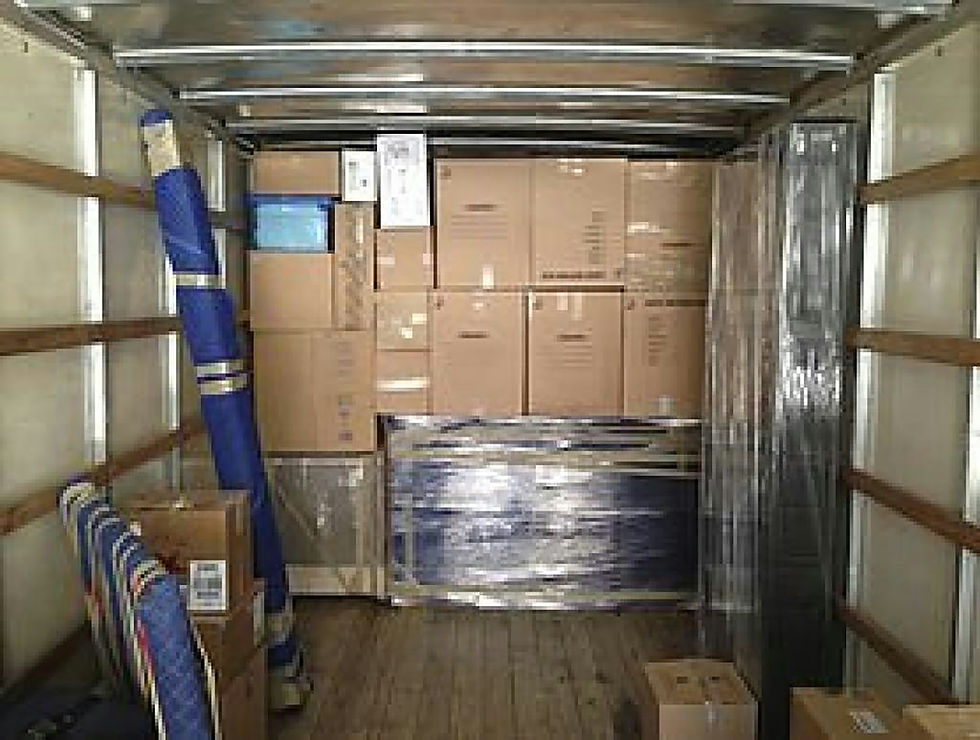
5. Understand when specialist lifting may be needed
Some furniture cannot safely travel through a building's internal route. In these cases, the destination team may need to assess an external furniture lift or other specialist equipment.
This is a separate planning exercise. A suitable window or balcony opening alone does not establish that external lifting is possible. The team must consider the item, building, equipment position, permissions and safe operating conditions.
Send photographs early and request a written assessment and quotation where needed. Do not assume specialist lifting is included in a standard delivery price or can be arranged immediately on the day.
For example, if your sofa cannot turn on the stair landing, the useful question is not simply “Can you bring a lift?” It is “Can you assess a safe delivery method for this sofa at this address, and confirm the cost and permissions?”

6. Keep shipping dates separate from home delivery dates
A vessel's estimated arrival is not an appointment to unload at your home.
Your shipment still needs to be available for release, complete the necessary customs process and fit into the destination delivery arrangements. Reloux's published terms explain that customs and transport issues can affect delivery timing.[1]
When planning time off work or the end of temporary accommodation, ask your coordinator:
What stage has the shipment reached?
Is anything still required from me?
Is the date an estimate or a confirmed delivery booking?
When should I expect the next update?
Tell the team about any dates when the property cannot accept deliveries, including building closures or holiday restrictions. Avoid committing to a date based only on a tracking update.
Keep essentials with you for the gap between your own arrival and your furniture arriving. Medication, documents, chargers, basic clothing and children's familiar items should remain accessible throughout the move.
7. Prepare customs paperwork before it becomes urgent
Delivery preparation includes making sure outstanding documents do not hold up the shipment.
Ask the appointed Israeli customs agent for a checklist based on your individual status. A person making Aliyah, a returning resident and someone relocating under another status should not assume they have identical requirements.
The Israel Tax Authority publishes an official Import Tax Guide for New Immigrants, explaining that exemptions are subject to eligibility conditions and time limits.[2] This guide does not establish entitlement for every person moving to Israel.
Provide the requested documents promptly and check that names and shipment details are consistent. Tell the agent about new purchases or changes to the inventory, and ask whether your arrival or any local formalities must take place before clearance.
Being ready to receive your furniture and being ready for customs clearance are two separate checks. Complete both.
8. Make a backup plan if your new home is not ready
A delayed tenancy, unfinished flooring or postponed key handover can change an otherwise well-organised move.
Contact your move coordinator as soon as there is a problem. Before dispatch, there may be an opportunity to discuss UK storage. Later, destination storage may need assessing. Reloux advertises storage options in the UK and Israel; suitability, availability and charges should be confirmed for your booking.[3]
Situation | What to discuss | Costs or arrangements to clarify |
The Israeli address is still undecided | Whether to hold the goods before dispatch | UK storage, handling and revised shipping arrangements |
Keys or renovations are delayed | Whether suitable destination storage can be arranged | Storage period, handling and eventual delivery |
You change the delivery address | A fresh check of distance and access | Any change to the original delivery quotation |
You cannot attend delivery | Whether an authorised representative can receive the goods | Written authority, contact details and signing arrangements |
Only some rooms are ready | Whether the agreed delivery can still be completed safely | Available space and any separately quoted storage or later handling |
Ask for the complete cost of the proposed solution. A weekly storage figure alone may not include handling and onward delivery.
Port storage and removal-company warehouse storage are different arrangements. Ask where the goods would be held, which charges apply and when charging begins.
9. Confirm what your delivery service includes
Before the shipment arrives, read the delivery section of your quotation alongside the applicable booking terms.
Reloux's written agreement defines the services for your move.[1] Ask for clarification on room placement, furniture unwrapping, reassembly, carton unpacking and packaging removal rather than assuming that each is included.
If you want unpacking, explain what you mean. Removing furniture wrapping, emptying every kitchen carton and putting belongings into cupboards are different amounts of work.
Similarly, furniture assembly is different from connecting appliances, mounting a television or drilling into walls. Arrange any separate tradespeople only once the relevant timing is sufficiently clear.
10. Get the property ready for delivery day
Aim to finish dusty or disruptive work before the crew arrives. Clear the access route, check that lighting works and leave enough floor space to manoeuvre furniture safely.
Prepare a simple room plan. Labels such as “Bedroom 1 — front room” are easier to follow than names unfamiliar to the crew. Use the same room names on the plan and any box labels.
Decide where the biggest items will go first. Moving a wardrobe twice becomes harder after the room fills with cartons.
Keep children and pets away from the unloading route. Have your inventory and phone ready, and make sure whoever receives the goods can answer placement questions.

Your Israel delivery preparation checklist
Send the complete address and local contact details.
Confirm when keys and access will be available.
Provide photos or video of the full unloading route.
Measure large furniture, doors, lifts and tight turns.
Arrange building permissions and lift reservations where required.
Clarify parking or unloading arrangements.
Obtain an assessment for any specialist access requirements.
Supply all documents requested by the customs agent.
Confirm the delivery services and any agreed extra charges.
Meet the payment requirements in your booking agreement.
Prepare a room plan and clear the property.
Confirm who will receive and check the shipment.
Keep essentials outside the shipment.
What to do when your belongings arrive
Show the crew the agreed access route and walk through the room plan before unloading begins. Flag any changes, such as a lift being out of service, immediately.
Check items against the inventory as far as practical, and record any missing items or visible damage clearly on the delivery paperwork. Photograph concerns and notify your move coordinator promptly in writing.
Ask for the reporting procedure and deadlines that apply to your booking and any protection cover. If damage is discovered during later unpacking, report it promptly too; do not assume a note made on delivery is the complete claims process.
Keep relevant packaging where safe and practical until you receive instructions, and retain copies of the paperwork.
Frequently asked questions
Can I arrange removals to Israel before I have a permanent address?
You can discuss the move and obtain an initial quotation, but tell the team that the destination property is undecided. The final address may change the access requirements, delivery cost and storage arrangements. Before authorising dispatch, agree how delivery will work if you still have not secured a home and ask the customs agent what address evidence is required.
Does door-to-door delivery include carrying furniture upstairs?
Check the access assumptions and inclusions in your written quotation. Provide the floor level, lift details and photographs before booking. Extensive stair carries, difficult access or specialist equipment may require a different plan and additional charges. Describing the service as door-to-door does not establish that every access situation is included.
What if my sofa will not fit in the lift?
Send the sofa dimensions and images of the lift, stairs and landings for assessment. The team can consider whether dismantling or another safe route is feasible. If external lifting is proposed, it needs its own access and permissions assessment. Do this before collection where possible; no delivery method should be assumed without checking the property.
Can I request a fixed delivery date in Israel?
Tell Reloux your preferred date and explain any restrictions early. Ask whether the date can be confirmed for the particular service and shipment stage. An estimated arrival or preferred date is not a guaranteed booking. Customs release, transport arrangements and destination availability must be considered before you make dependent plans.
Do I need to be present for delivery?
Agree the receiving arrangements with your coordinator. If someone else will attend, ask whether this is permitted and what written authority is needed. Your representative should have access to the property, understand the room plan and be able to check and sign for the goods. Customs requirements relating to your own presence are a separate question for the customs agent.
What happens if my new home is not ready?
Inform the team immediately and request a storage or rescheduling proposal. Confirm the location, availability, charging period, handling costs and eventual delivery arrangements. Earlier notice gives the team more opportunity to assess options; do not assume an arrival can simply be postponed without cost.
Are unpacking and furniture assembly included?
Your quotation should specify this. Ask which furniture will be reassembled, whether cartons will be unpacked and when packaging will be removed. If you want services beyond the agreed scope, request them before delivery so the team can confirm labour, timing and price.
Will making Aliyah mean my shipment clears customs automatically?
No. New immigrant tax benefits have eligibility conditions, and the shipment still needs the relevant documentation and clearance. Check the official Israel Tax Authority guidance and obtain instructions from your appointed customs agent for your circumstances.[2] Do not arrange delivery around an assumed automatic release.
Before you confirm your delivery arrangements
You do not need every detail of your new home settled before starting the conversation. It helps to know what is confirmed, what remains uncertain and which pieces of furniture need particular attention.
The most useful next step is to gather your address details, access photographs, furniture measurements and property handover date in one place. Send these to your move coordinator and ask them to confirm any outstanding requirements in writing.
For readers considering removals to Israel from the UK with Reloux, these details can support the survey and delivery assessment. Preparing those final few metres—from the street to your front door—helps you feel more ready for the day your new home becomes your own.


